The Hidden Costs of "Free" Software
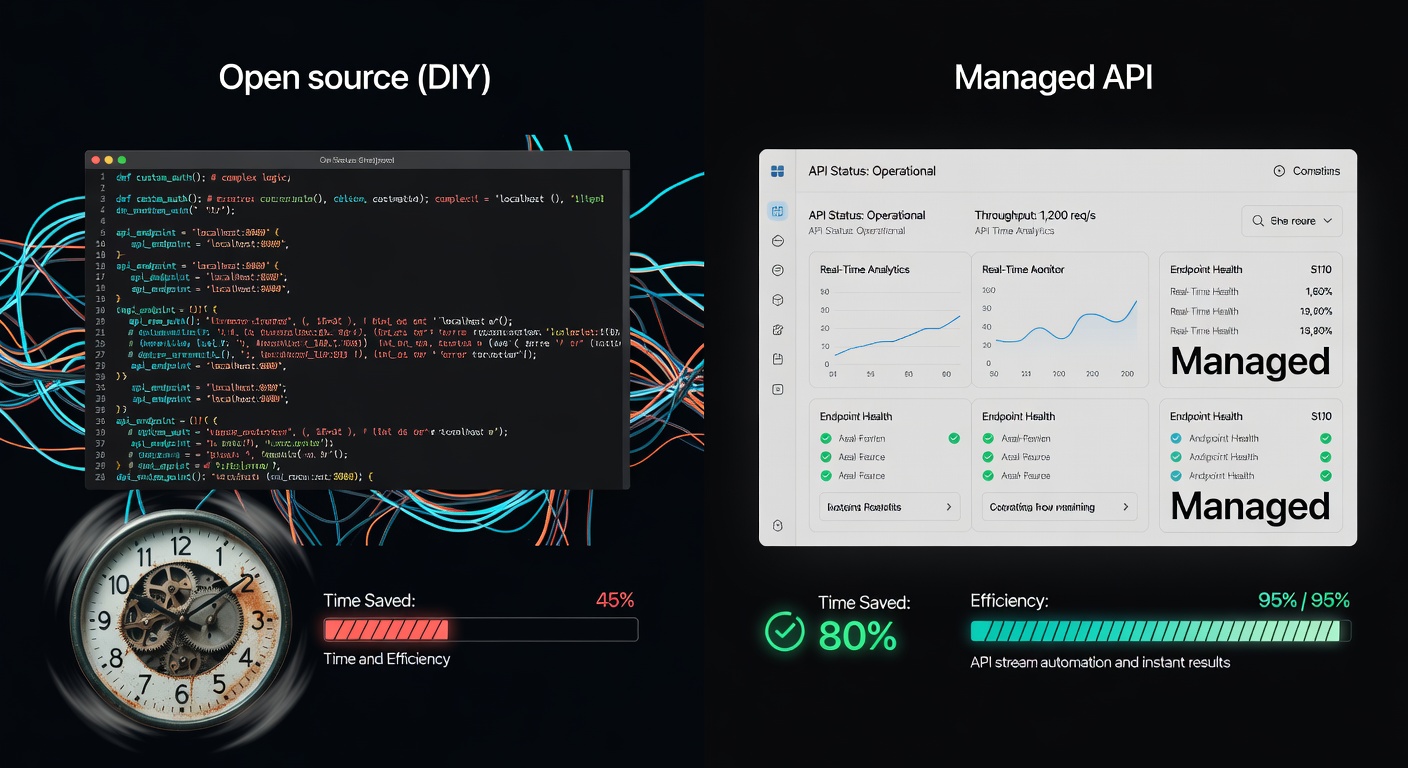
Meta’s VideoSeal is a breakthrough in neural watermarking. Being open source, it’s tempting to think you can just spin up a container and be done. But as anyone who has managed a GPU pipeline knows, the "inference" is only 10% of the battle.The Developer's TCO (Total Cost of Ownership)
Self-hosting VideoSeal requires: 1. NVIDIA H100/A100 Instances: These are expensive and often hard to procure in high quantities. 2. MLOps Overhead: You need engineers to handle the deployment, monitoring, and scaling of a tensor-heavy pipeline. 3. C2PA Integration: VideoSeal is just the *watermark*. You still have to build the cryptographic signer and manifest generator to be legal.Why Managed Beats DIY
LexPixel handles the "heavy lifting." We manage the GPU clusters, handle the cold-start latencies, and perfectly sync the watermarking with the C2PA metadata injection. You pay $0.30/min and skip the $150k/year MLOps engineer salary.Verdict
If you are a tech giant with 50+ engineers, self-hosting is a viable option. If you are a lean team or agency, LexPixel’s managed API will save you 6 months of R&D and thousands in infrastructure costs.Frequently Asked Questions
Can I cancel LexPixel anytime?
Yes. Our pay-as-you-go model means you only pay for what you use, with no long-term commitments or cancellation fees.
Is Meta's VideoSeal model production-ready for self-hosting?
Meta VideoSeal is a research-grade model released under an open licence. While it functions well in controlled environments, productionising it requires GPU infrastructure, model serving, auto-scaling, and C2PA integration — a significant engineering investment that LexPixel has already done.
Does LexPixel use Meta VideoSeal under the hood?
LexPixel uses a managed, optimised implementation of neural watermarking models including VideoSeal as one component of our pipeline. We also maintain C2PA manifest signing, soft binding, and platform robustness tuning on top of the base model.